
‘A waste of time for all of us’: caught in the crossfire of the peer-review wars
August 2026
Client(s): Nature
Project: Citation Cartels
Tools: D3, HTML5, CSS3, JavaScript, Adobe Illustrator, Shorthand
Categories: Story-telling; article
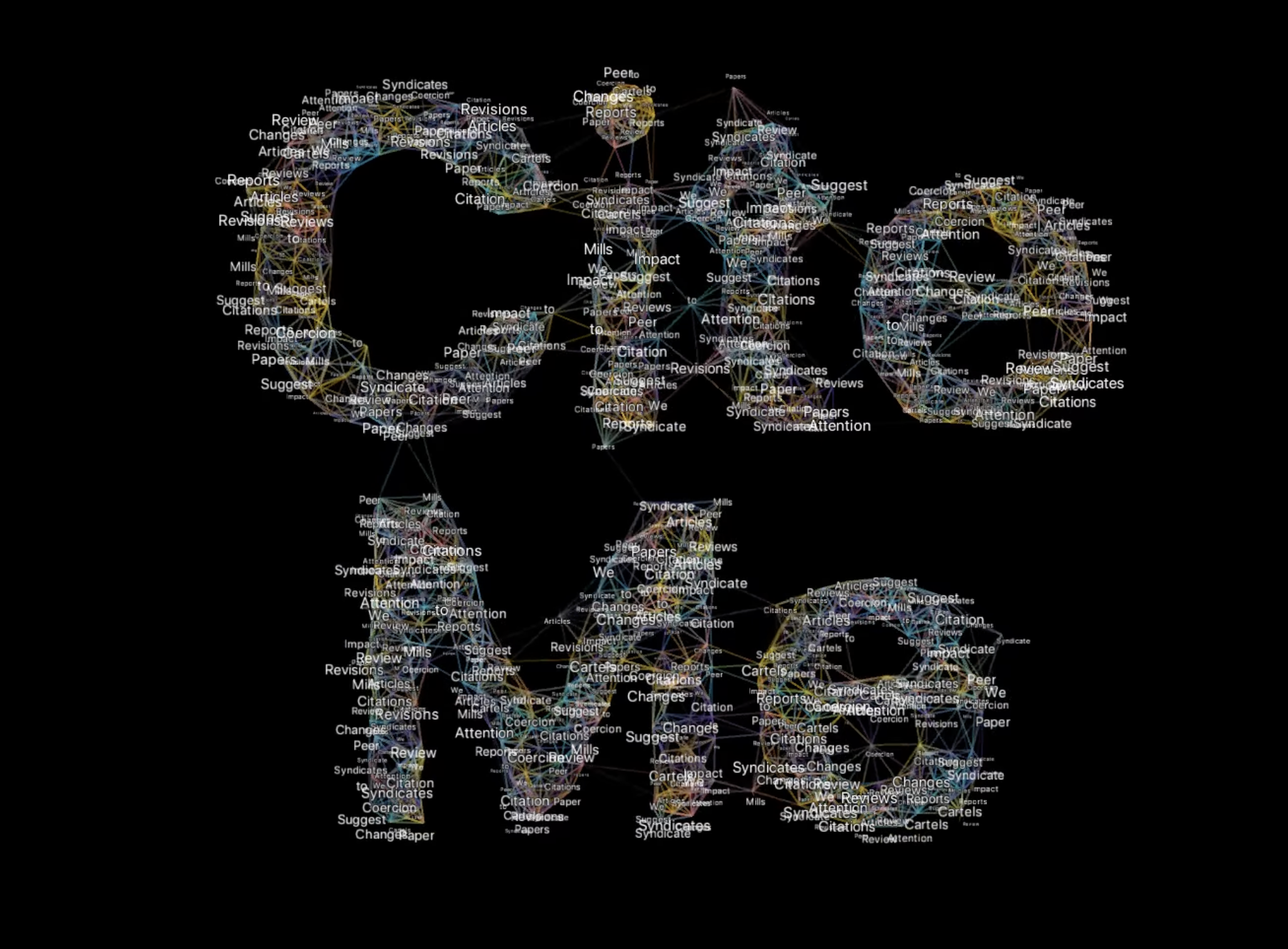
Illustration by Andreion De Castro
Illustration by Andreion De Castro
Review mills — researchers who write fake referee reports with coercive citation requests — are setting off a war in academic publishing. What happens to those caught in the middle?
In early 2026 I was approached by a Nature editor at work seeking design assistance on an interesting online article he was working on relating to the art of Citation Milling in the academic research community.
With ideas for visuals already in his head, he sought expert capability to produce a series off high-resolution bespoke visualisations for an online article to be hosted on Shorthand (liked to above).
Initial discussions revolved around whether his ascertain to use Circos diagrams to visualise the many types of author-citation reference relationships was actually the most practical and suitable for the end result. Given such chart types are a closed loop design, and we also we may attempt to develop it into a fully-productionized version later on, which would require the ability to be future-proofed, I managed to convince the editor to pivot to using a more traditional style Sankey chart layout, but with both internal and external edge links to represent different forms of author-citation relationships. I strongly advocated use of more traditional-style Sankey charts over the circular Circos alternatives due to the potential prospect of needing to extend the considered time interval for any such analysis; since Circos charts were a closed, finite range visual, they prevented the ability to do this.
Once we had settled upon the broad type of visualisation, we set about shortlisting key author-citation relationships the editor wanted visualised; namely:
self-citations
citations-in-kind/citation-in-return
citations cartels/citation mills
citations of papers by the focal author
citations by the focal author or other research[ers] papers
and discerning a suitable mechanism to colour encode individual papers and citation links via a logical method of categorisation. We settled on the broad research topic area of each paper to achieve this.

Colour encoding categorisation